
Imagine Village
SITE ANALYSIS
MASTER PLANNING
ARCHITECTURE
DEVELOPMENT CONSULTING
INTERIORS
ART & DESIGN
BRANDING
LOCATION: LANCASTER, CALIFORNIA
SIZE: 70,0140 SF - 76 units
STATUS: COMPLETED
PROGRAM: Mixed-use building of affordable housing for low-income families, permanent supportive housing for homeless veterans, and ground floor offices for Penny Lane Centers.
PARTNERS/CONSULTANTS: Architecture provided in partnership with Hatch-Colasuonno Studio.
AWARDS: Architecture Master Prize for Supportive Housing | 2020
An affordable housing community of 76 units for veterans and families, this project also provides an adoption/foster center, as well as support services, communal areas and extensive landscaping. Part of a larger complex of nonprofit companies, it is designed with the environment in mind. Utilizing the vast site, a balance of density and open space was achieved by programming multiple buildings with resident and unit type. Landscaping was used to create unobtrusive privacy and security for the distinct and diverse populations occupying the property.
.
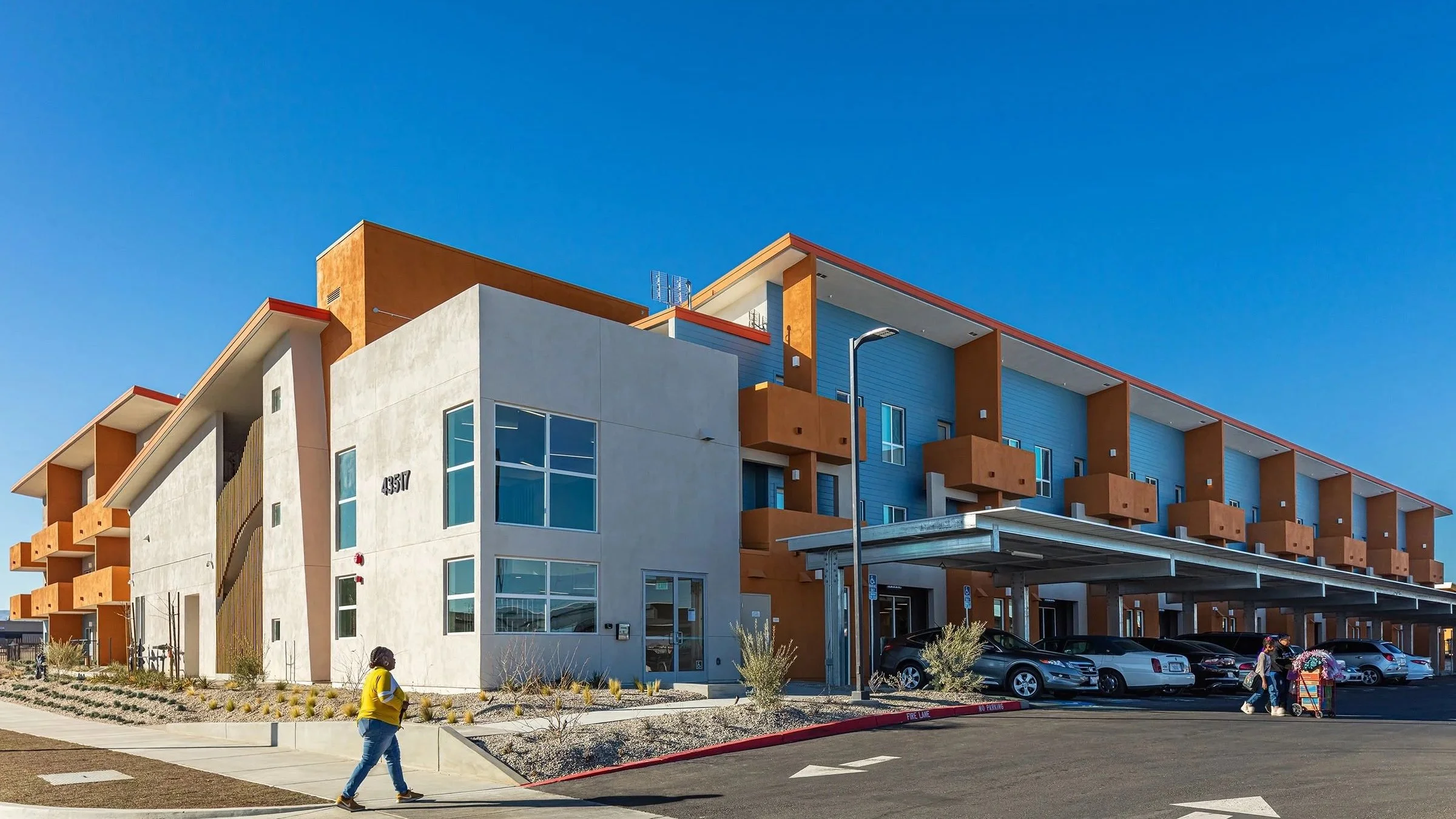
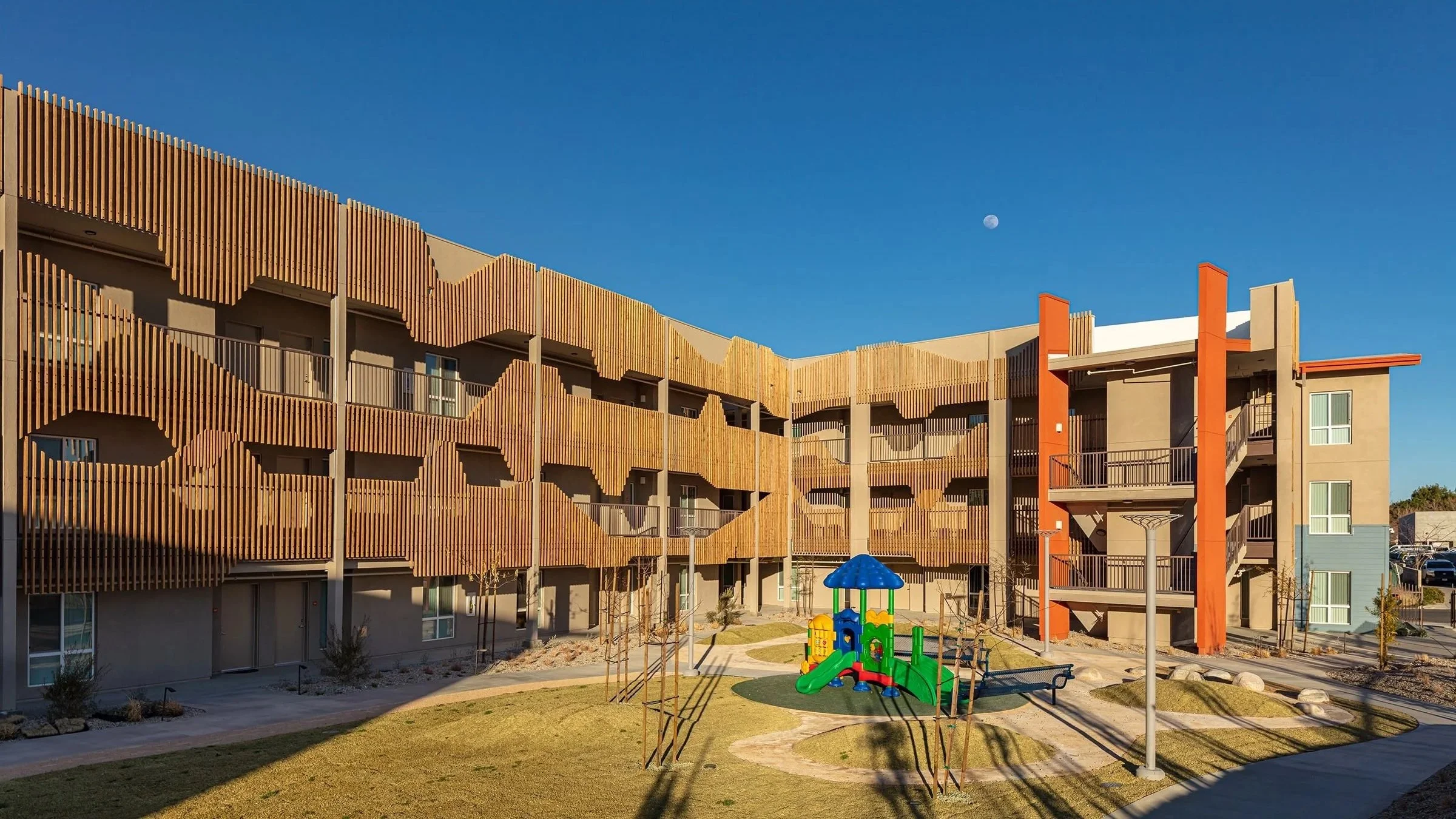
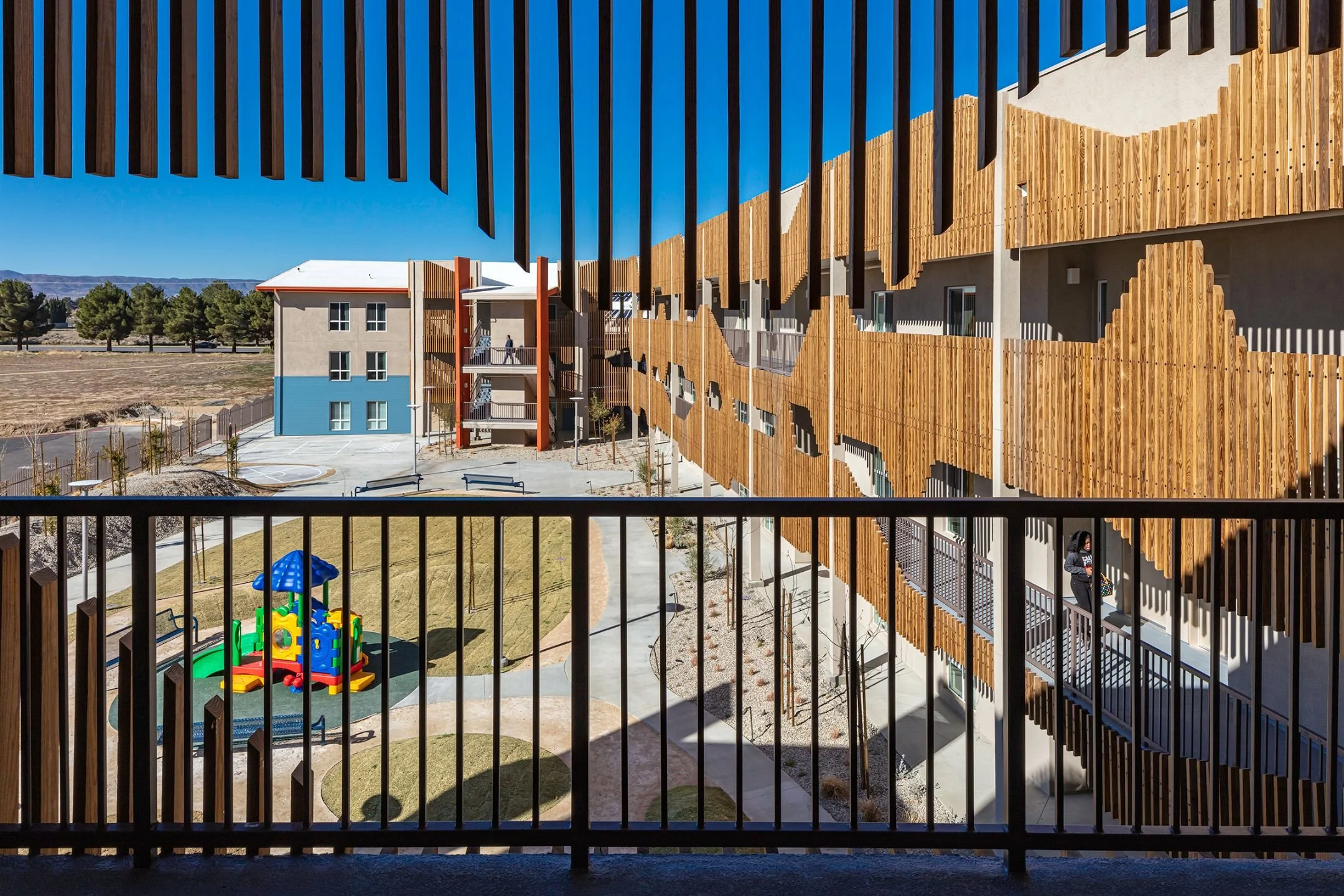
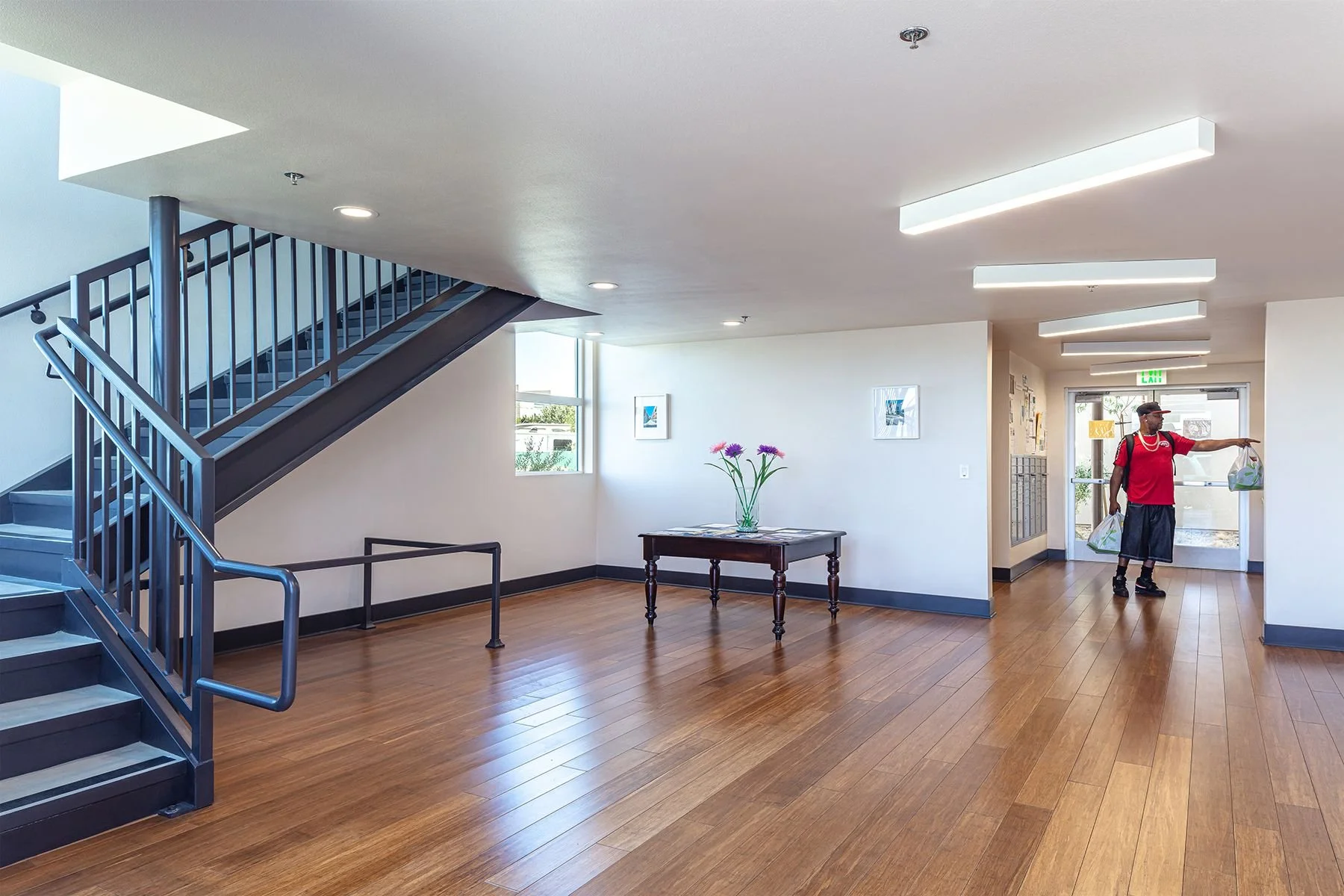
Overcoming the challenge to safely and sensitively house the two distinct resident types — families and veterans — was achieved through thoughtful architectural planning. The 30 studio apartments for veterans sit on top of the Penny Lane offices in the north wing and feature their own entry at the east with a small gathering room, service office, and gym. The 45 low-income family units are grouped by size, with one-bedroom, two-bedroom, and three-bedroom apartments each inhabiting their own wing, all of which cradle an expansive garden and playground area to the south. The entry for families is on the west side with a large common room.
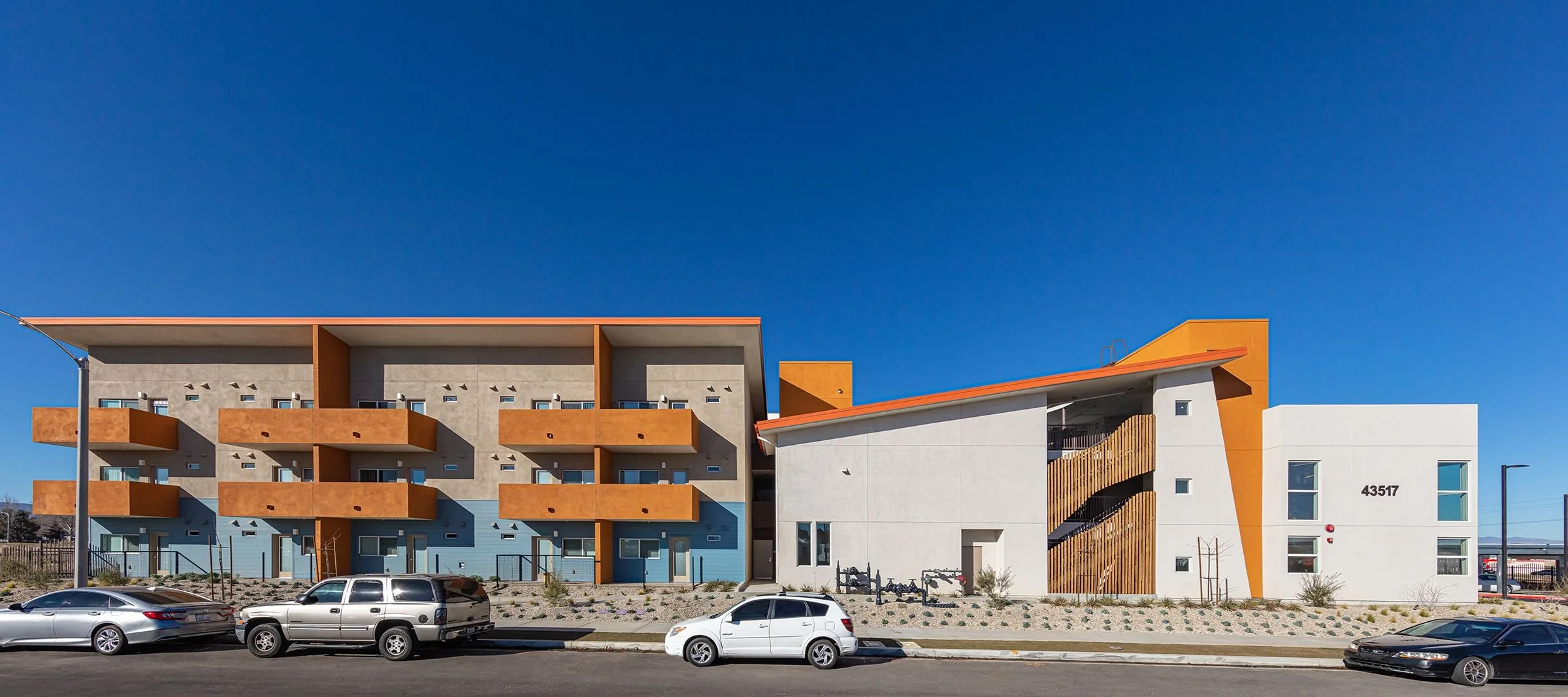
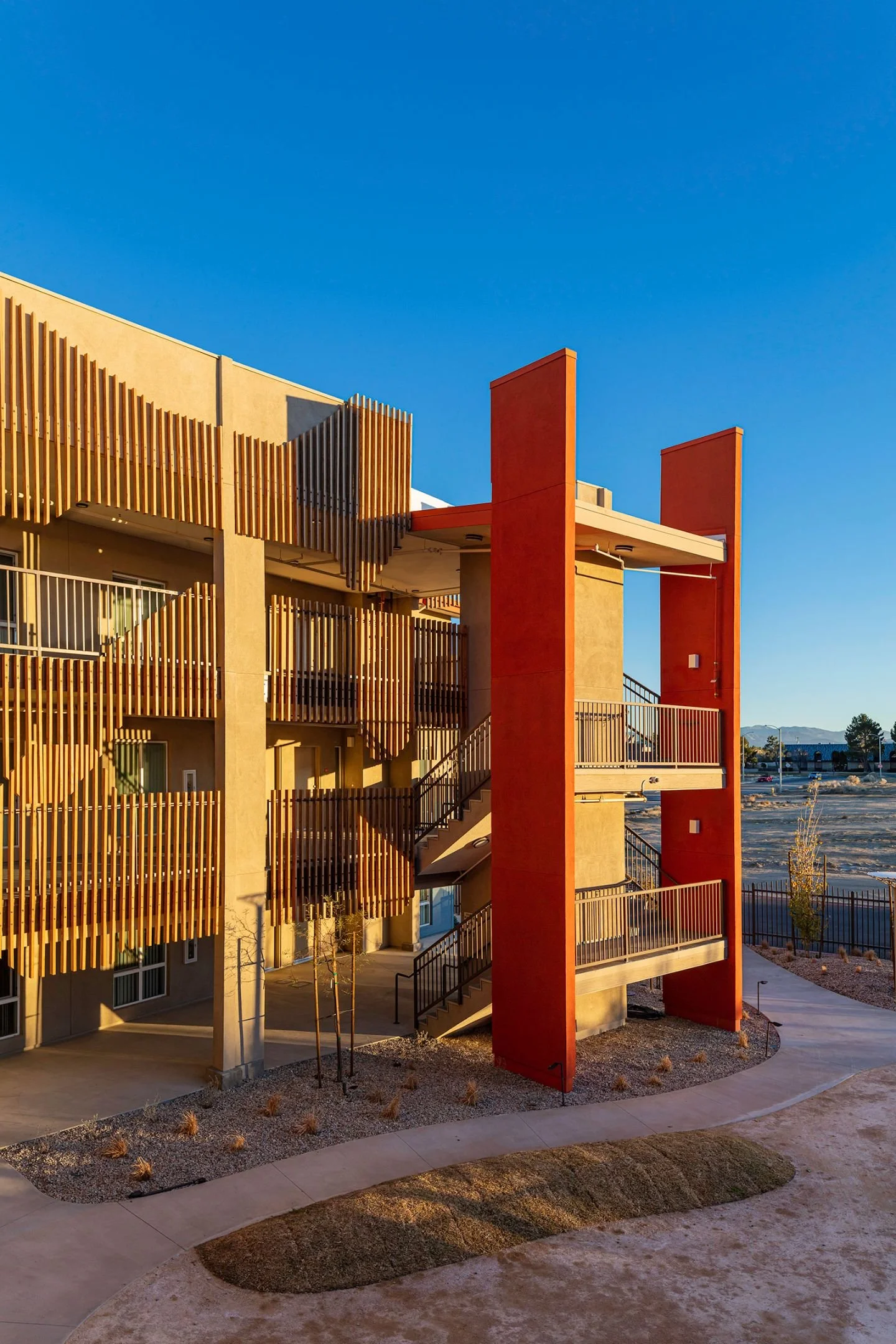
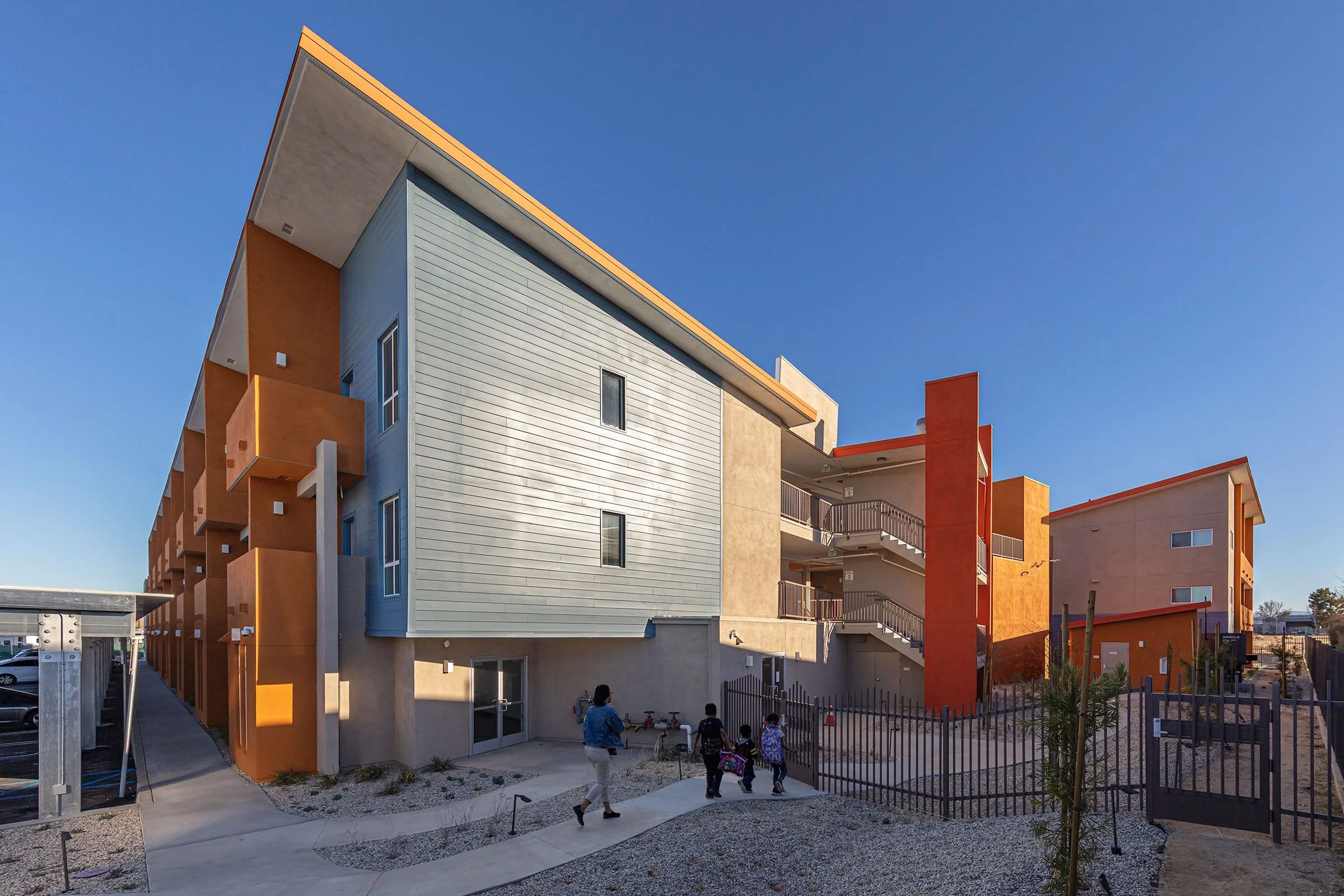
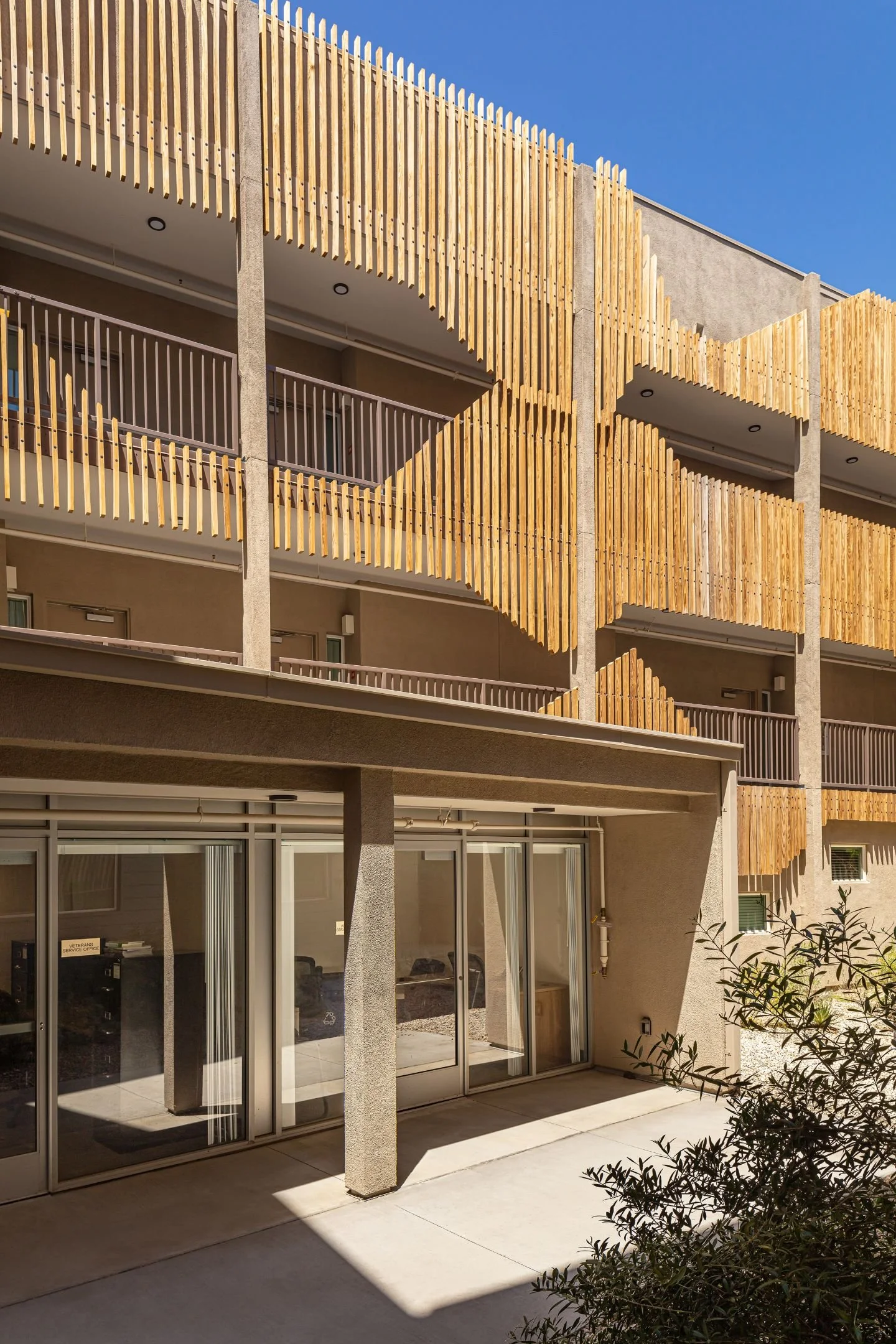
A novel approach to shading the south façade was completed with thermal wood to mitigate a desert climate as disparate as the population. The custom-designed screen dances along the corridors, providing relief from the summer heat and privacy to the apartment windows and doors. In the southern garden, a large mound and trees serve as both a windbreak and beloved play feature. In respect to the natural surroundings, the colors of the buildings reflect the desert’s colorful ground and sky. These features, along with others such as installing one of the first two combined greywater/stormwater systems in Los Angeles County (both done by BDG), earned the building LEED Gold status.
.
.